Meta Description: Discover the fascinating history of the Xiongnu Empire, the powerful ancient nomadic confederation that challenged the Han Dynasty and reshaped Asian history.
When you think of ancient China, the Great Wall immediately comes to mind. But have you ever wondered who, exactly, this massive fortification was built to keep out? Enter the Xiongnu Empire, a vast and powerful nomadic confederation that dominated the Asian steppes for centuries.
Long before the Mongols under Genghis Khan swept across the continent, the Xiongnu were the undisputed masters of horseback warfare. Their frequent clashes with the Chinese Han Dynasty not only shaped the borders of ancient Asia but also influenced global trade and military strategy. In this article, we will dive deep into the origins, rise, and enduring legacy of the Xiongnu Empire.
Who Were the Xiongnu?
The Xiongnu (pronounced shong-noo) were a complex confederation of nomadic tribes originating in the eastern Eurasian Steppe, encompassing modern-day Mongolia, Siberia, and parts of northern China. While their exact ethnic and linguistic origins remain a subject of debate among historians and archaeologists, they are generally believed to be a diverse, multi-ethnic coalition.
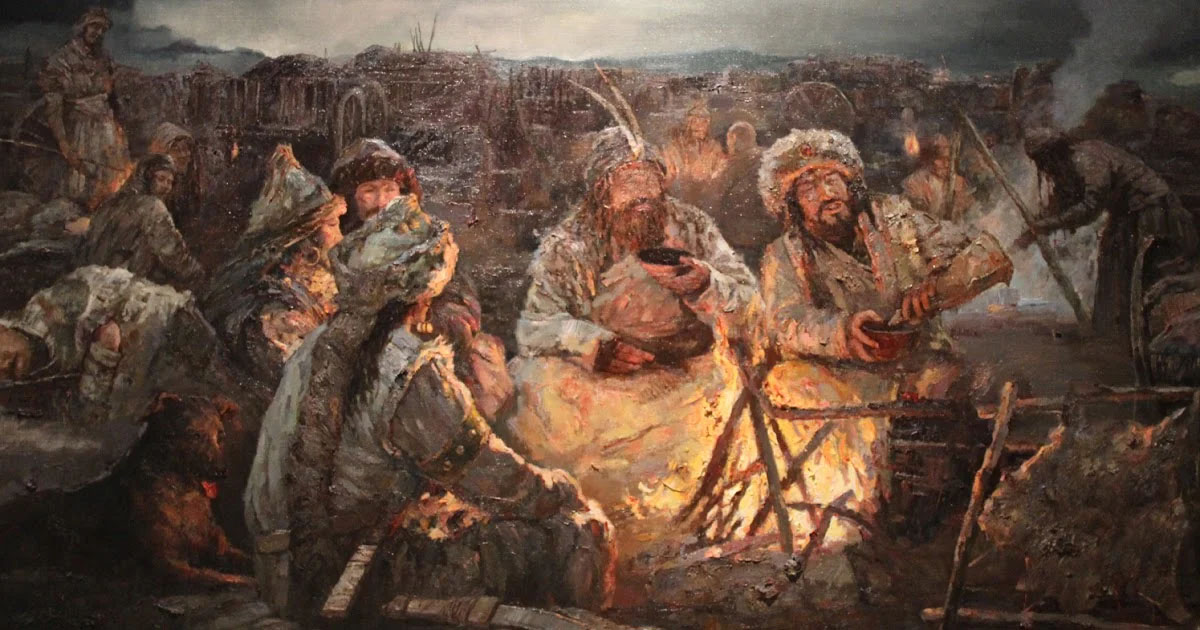
The Xiongnu economy was heavily dependent on pastoral nomadism. They raised horses, sheep, and cattle, moving their herds across the vast grasslands in search of seasonal pastures. However, a purely nomadic lifestyle couldn’t sustain a massive, growing empire. To acquire agricultural goods, silk, and luxury items, the Xiongnu relied heavily on trade. When trade relations broke down, they turned to raiding their settled agrarian neighbors to the south, sparking centuries of conflict.
The Rise of Modu Chanyu
The Xiongnu truly transformed from a loose collection of tribes into an unstoppable imperial force under the leadership of Modu Chanyu (reigned 209–174 BCE). “Chanyu” was the title given to their supreme ruler, akin to an emperor.
Modu is a legendary figure in ancient Asian history. Through brilliant military strategy and ruthless political maneuvering, he unified the warring steppe tribes under a highly organized and centralized command structure. Under Modu Chanyu’s rule, the Xiongnu Empire expanded rapidly. He established a powerful military hierarchy based on a decimal system, organizing warriors into units of tens, hundreds, thousands, and ten thousands. This level of organization was unprecedented on the steppe and allowed the Xiongnu to mobilize massive, highly disciplined armies at a moment’s notice.
Unmatched Military Tactics: Masters of Horse Archery
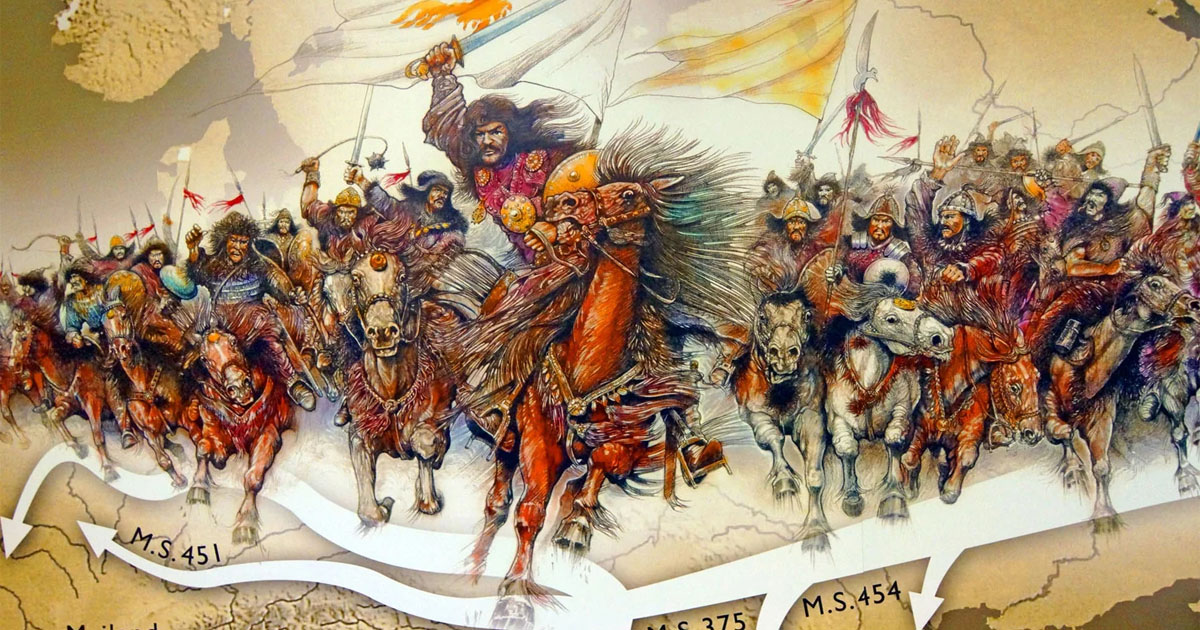
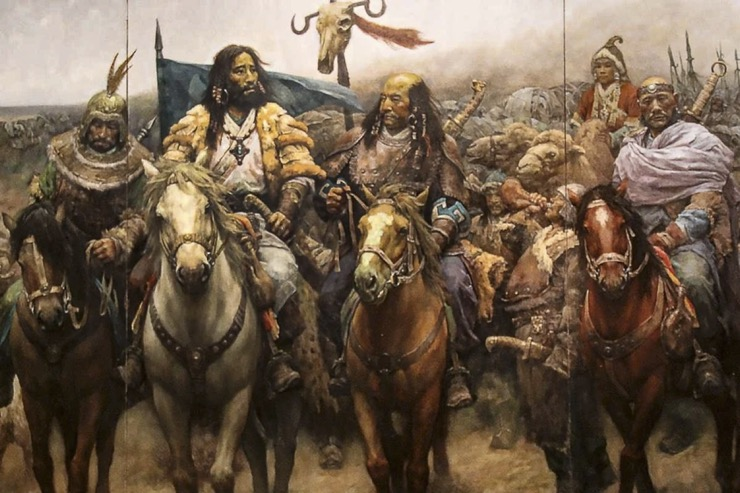
The core strength of the Xiongnu Empire lay in its unmatched military prowess. These warriors were born in the saddle, mastering horseback riding and archery from a very young age. The standard Xiongnu warrior was a light cavalryman armed with a composite bow, a devastating weapon capable of piercing armor from impressive distances.
Their battle tactics revolved around speed, mobility, and psychological warfare:
- Hit-and-Run Raids: They would strike swiftly, loot settlements, and disappear back into the vast steppe long before enemy reinforcements could arrive.
- Feigned Retreats: A classic nomadic tactic where a small force would pretend to flee in panic, luring the enemy into a deadly ambush surrounded by hidden Xiongnu archers.
- Logistical Supremacy: Because their armies consisted almost entirely of cavalry, they didn’t rely on slow-moving supply trains. They hunted and foraged on the move, giving them an incredible strategic advantage over the slow, infantry-heavy armies of agrarian states.
The Clash of Titans: Xiongnu vs. The Han Dynasty
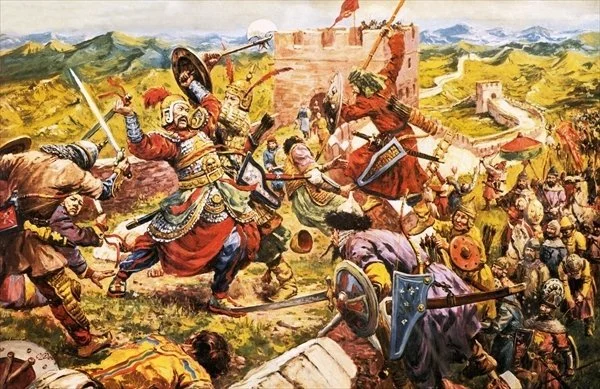
The relationship between the Xiongnu Empire and the Chinese Han Dynasty defined East Asian geopolitics for centuries. Initially, the early Han emperors, recovering from civil war, could not defeat the Xiongnu militarily. Instead, they relied on the Heqin system—a policy of political appeasement. The Han sent Chinese princesses to marry the Chanyu and paid massive annual tributes of silk, grain, and gold to prevent border raids.
However, as the Han Dynasty grew wealthier and more powerful, particularly under Emperor Wu (141–87 BCE), this dynamic drastically shifted. Emperor Wu launched the prolonged Han-Xiongnu War, sending massive cavalry expeditions deep into the Mongolian steppes. This conflict forced the Han to innovate, expanding their own cavalry forces and pushing their borders westward. This aggressive westward expansion eventually laid the groundwork for the famous Silk Road, opening lucrative trade routes that connected the East and West.
The Decline and Mysterious Legacy
No empire lasts forever. The decline of the Xiongnu Empire was brought about by a devastating combination of internal civil wars, succession disputes, harsh winters that decimated their livestock, and relentless pressure from Han military campaigns.
By the 1st century CE, the empire fractured into two main factions: the Southern Xiongnu, who submitted to the Han as vassals, and the Northern Xiongnu, who were eventually pushed westward out of the region by competing nomadic tribes.
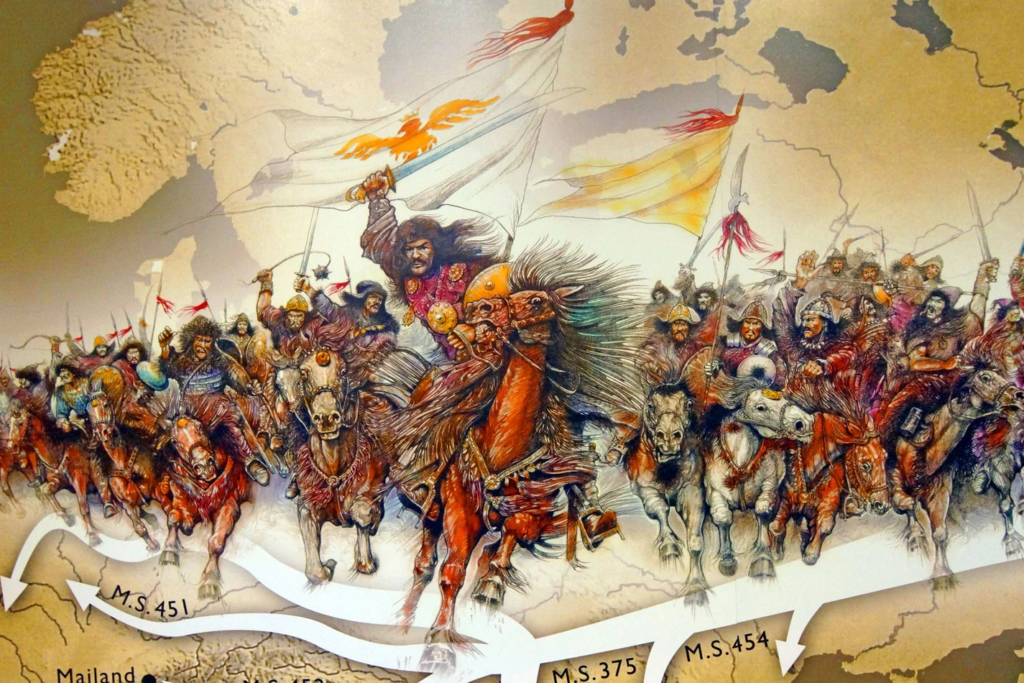
Their disappearance from Asian historical records has led to one of history’s greatest mysteries: Did the fleeing Northern Xiongnu eventually migrate to Europe to become the infamous Huns who challenged the Roman Empire under Attila? While the direct linguistic and genetic links are still hotly debated among scholars today, the structural and cultural similarities between the two nomadic empires are undeniable.
Conclusion
The Xiongnu Empire was far more than a disorganized horde of raiders. They were a sophisticated political and military powerhouse that consistently challenged the greatest agrarian empire of their time. By forcing the Han Dynasty to adapt, militarize, and expand, the Xiongnu indirectly catalyzed the creation of the Silk Road and the subsequent interconnectedness of the ancient world.
Understanding the Xiongnu is absolutely essential for anyone looking to grasp the complex, dynamic history of ancient Asia. Their legacy as the original lords of the steppe paved the way for future nomadic empires that would forever alter the course of world history.