

When it comes to modern cinematic milestones, few films have left a footprint as massive as James Cameron’s 2009 science fiction masterpiece, Avatar. Smashing box office records to become the highest-grossing film of all time, this blockbuster didn’t just entertain audiences; it completely revolutionized the way we experience movies.
If you have somehow missed this monumental piece of pop culture history, or if you are simply looking for a refresher before diving into its expanding universe of sequels, you are in the right place. This spoiler-free guide will introduce you to the mesmerizing world of the Avatar 2009 movie, the groundbreaking technology behind it, and the foundational premise that captured the hearts of millions across the globe.
The Visionary Mind of James Cameron
To truly appreciate Avatar, you have to understand the sheer ambition behind its creation. Legendary director James Cameron—the mastermind behind iconic films like The Terminator, Aliens, and Titanic—actually drafted the original treatment for Avatar way back in 1994.
So, why did it take fifteen years to hit the silver screen? The answer is simple: the technology required to bring Cameron’s vision to life simply did not exist yet.
Instead of compromising his dream, Cameron waited. He spent years helping to develop cutting-edge performance-capture technology and state-of-the-art 3D fusion cameras. By the late 2000s, the visual effects industry had finally caught up to his imagination. The result is a film that blurs the line between live-action and computer-generated imagery (CGI), creating a seamless, hyper-realistic universe that still holds up spectacularly against today’s modern releases.

Welcome to Pandora: A Visual Masterpiece
The true star of the Avatar film is undoubtedly its setting: Pandora.
Pandora is not a planet, but rather a lush, Earth-like moon orbiting a massive gas giant in the Alpha Centauri star system. From the very first frame, the film immerses you in an alien wilderness that is as dangerous as it is breathtakingly beautiful.
When you step into this world, you are treated to a visual feast unlike anything seen before in sci-fi cinema. The environment boasts:
- Towering Flora and Fauna: Trees massive enough to house entire communities and prehistoric-scale wildlife that roam the dense jungles.
- The Hallelujah Mountains: Gravity-defying, colossal islands of rock that float majestically in the sky, suspended by powerful magnetic currents.
- Bioluminescent Nights: When the sun goes down, Pandora transforms. The entire forest floor, the plants, and even the creatures glow in vibrant, mesmerizing neon hues of blue, purple, and green.
The level of detail poured into the ecosystem of Pandora is staggering. Cameron and his team hired botanists, astrophysicists, and linguists to ensure that every leaf, creature, and spoken word felt entirely authentic and scientifically plausible.

The Premise: Two Worlds Collide
At its core, Avatar is an epic tale of exploration, clashing cultures, and survival.
The story is set in the mid-22nd century. Humanity has severely depleted Earth’s natural resources, leading the powerful Resources Development Administration (RDA) to look to the stars. They arrive on Pandora with one primary goal: to mine a highly valuable, room-temperature superconductor known cheekily as “unobtanium.”
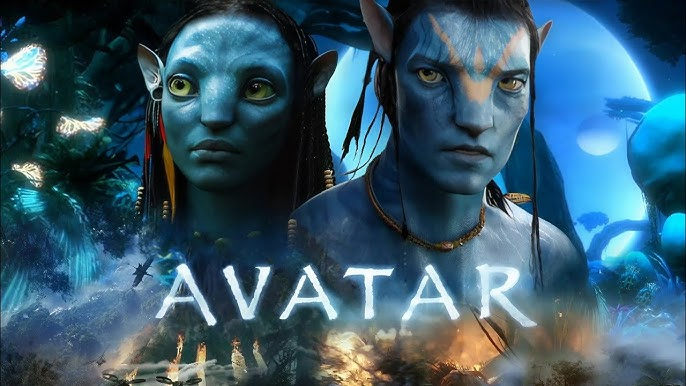
However, there is a major obstacle. Pandora is home to the Na’vi, a highly evolved, indigenous species of ten-foot-tall, blue-skinned humanoids. The Na’vi live in deep harmony with their environment, worshiping a guiding life force they call Eywa. Naturally, they are entirely opposed to the aggressive mining operations tearing up their sacred lands.
Because the atmosphere of Pandora is highly toxic to humans, the RDA develops the Avatar Program. By using advanced genetic engineering, scientists create “avatars”—synthetic Na’vi bodies grown from a mix of human and Na’vi DNA. Specially trained human operators can mentally link with these avatars, allowing them to freely walk the surface of Pandora, interact with the environment, and attempt to build diplomatic bridges with the local tribes.

Enter our protagonist, Jake Sully (played by Sam Worthington). Jake is a paraplegic former Marine who is unexpectedly recruited to join the Avatar Program to replace his deceased twin brother, a brilliant scientist.
Jake is thrust into this strange new world with a dual mission: the scientists want him to learn the ways of the Na’vi to foster peace, while the ruthless military arm of the RDA wants him to gather tactical intelligence to force the natives to relocate.
Through his avatar body, Jake experiences the exhilarating freedom of walking and running again. But when he is separated from his team in the deadly jungles, his life is saved by Neytiri (played by Zoe Saldana), a fierce and skilled Na’vi warrior.
As Neytiri reluctantly agrees to teach Jake the profound, deeply spiritual ways of her people, Jake finds himself caught between the heavy machinery of human industrialism and the beautiful, untamed spirit of Pandora.

Themes That Resonate Today
While the visual effects are what initially drew crowds to theaters, the thematic depth of Avatar is what cemented its legacy. The film serves as a powerful allegory for several real-world issues:
- Environmental Conservation: Avatar holds a mirror up to humanity’s relationship with nature, highlighting the destructive consequences of prioritizing corporate greed and resource extraction over ecological preservation.
- Imperialism and Indigenous Rights: The dynamic between the heavily armed, technologically advanced humans and the nature-bound Na’vi heavily parallels historical events of colonization and the displacement of indigenous populations.
- Connection vs. Disconnection: The movie contrasts the hyper-mechanized, disconnected lives of the humans with the profound, literal biological connections the Na’vi share with their planet’s flora and fauna.
Why You Need to Watch (or Rewatch) Avatar
Even more than a decade after its initial release, Avatar remains a gold standard for world-building in cinema. It is a sweeping, emotional epic that combines high-octane action sequences with tender moments of discovery and romance.
Whether you are watching it for the jaw-dropping CGI, the thrilling creature designs, or the classic “stranger in a strange land” narrative, James Cameron’s 2009 masterpiece delivers an unforgettable cinematic experience. It is not just a movie you watch; it is a world you visit.
So, grab some popcorn, turn down the lights, and prepare to take your first steps onto the glowing soil of Pandora. You are in for the ride of a lifetime.