For over 600 years, the Ottoman Empire stood as one of the most powerful and enduring states in world history. Stretching across three continents—Europe, Asia, and Africa—it was a beacon of military might, economic prosperity, and cultural achievement. However, by the early 20th century, this once-mighty behemoth had fractured and dissolved, reshaping the geopolitical map of the modern Middle East and Europe.
So, what exactly caused the fall of the Ottoman Empire? Its collapse was not the result of a single catastrophic event, but rather a complex combination of internal decay and external pressures. This article delves into the critical economic, political, and military factors that led to the ultimate demise of this historic superpower.
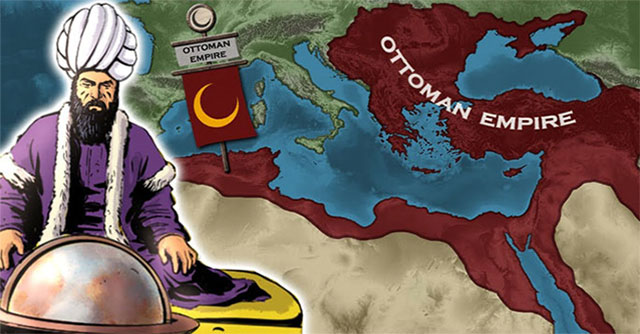
The “Sick Man of Europe”: Economic and Military Decline
By the mid-to-late 19th century, the Ottoman Empire had earned a grim moniker from Russian Tsar Nicholas I: the “Sick Man of Europe.” This title accurately reflected a severe and terminal decline in both economic stability and military prowess.
While Western European nations were rapidly industrializing, the Ottoman economy remained largely agrarian and heavily dependent on outdated administrative systems. The Industrial Revolution largely bypassed the empire. Consequently, European powers dominated global trade routes, flooding Ottoman markets with cheap, mass-produced manufactured goods that crippled local artisans and traditional industries.
Furthermore, the empire fell into massive debt, relying heavily on European loans to fight wars and maintain its sprawling bureaucracy. To secure these loans, the Ottomans were forced to grant “capitulations”—sweeping economic privileges and tax exemptions to foreign powers. These concessions effectively surrendered Ottoman economic sovereignty, allowing European nations to dictate trade terms within the empire’s own borders.
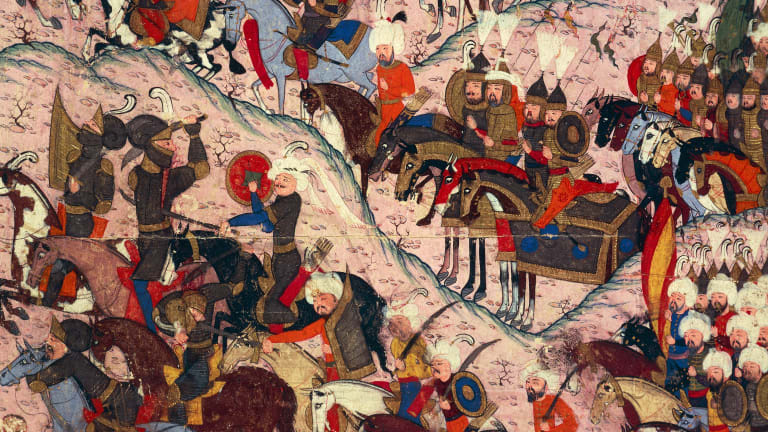
Militarily, the once-feared Ottoman army, famous for its elite Janissary corps and early adoption of gunpowder, failed to modernize its tactics and weaponry at the same pace as its European rivals. The empire began losing critical territories in a series of disastrous conflicts, most notably against the Russian Empire, signaling to the world that its defensive capabilities were fundamentally broken.
The Rise of Nationalism and Internal Fracturing
The Ottoman Empire was a vast, complex mosaic of different ethnicities, languages, and religions. For centuries, the traditional millet system allowed diverse groups to live under Ottoman rule with a significant degree of religious and legal autonomy. However, the 19th century ushered in the age of nationalism—a political ideology that proved fatal to the multi-ethnic empire.
Inspired by the French Revolution and deliberately supported by rival European powers seeking to weaken the Ottomans, nationalist movements erupted across the empire’s territories. The Greeks successfully fought for independence in the 1820s, setting a dangerous precedent that other ethnic groups would soon follow. Throughout the late 19th and early 20th centuries, the Balkans became a powder keg. The devastating Balkan Wars (1912–1913) stripped the Ottomans of nearly all their remaining European territories, forcing hundreds of thousands of Muslim refugees to flee to Anatolia.
Internally, political instability was rampant. The Young Turks, a coalition of nationalist reformists and military officers, seized power in 1908 with the goal of modernizing the state, restoring the constitution, and centralizing control. While their primary intention was to save the empire from total collapse, their aggressive “Turkification” policies often alienated non-Turkish populations, further accelerating the empire’s internal fracturing.
World War I: The Final Blow to the Ottoman Empire
While economic ruin and nationalist revolts severely weakened the state, it was the catastrophic decision to enter World War I that served as the final nail in the coffin for the Ottoman Empire.
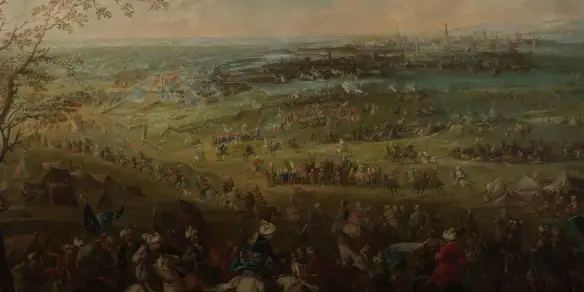
In 1914, the Ottoman leadership, driven by the ambitious Enver Pasha, aligned with the Central Powers (Germany and Austria-Hungary). They hoped that a victory would allow them to reclaim recently lost territories and break free from Western European economic dominance. Despite scoring some notable defensive victories—most famously at the Battle of Gallipoli in 1915, where Ottoman forces successfully repelled a massive Allied naval and ground invasion—the empire was fundamentally ill-equipped for a protracted, industrialized, multi-front war.
The British military effectively exploited the empire’s internal ethnic tensions by backing the Arab Revolt (1916–1918). They encouraged Arab nationalists to rise up against Ottoman rule in exchange for promises of post-war independence. Meanwhile, the empire suffered devastating losses against Russian forces in the brutal winter conditions of the Caucasus, and against British forces in the Middle East, steadily losing control of key cultural and strategic cities like Baghdad, Damascus, and Jerusalem.
By October 1918, the Ottoman military was completely exhausted, its economy was in ruins, and its leadership was forced to sign the Armistice of Mudros, effectively surrendering unconditionally to the Allied Powers.
The Aftermath: Treaties, Partition, and the Birth of Modern Turkey
The conclusion of World War I marked the official and irreversible end of the Ottoman Empire. The victorious Allied Powers sought to divide the empire’s vast, resource-rich territories among themselves.
Through the secret Sykes-Picot Agreement and the subsequent Treaty of Sèvres (1920), the Allies partitioned the Middle East. They drew arbitrary borders that created modern-day nations like Iraq, Syria, Lebanon, and Jordan, placing them under British and French colonial mandates.
The Treaty of Sèvres also heavily restricted the remaining Turkish state in Anatolia, leaving it a fraction of its former size, heavily demilitarized, and under foreign occupation. However, this deeply humiliating treaty sparked a fierce Turkish nationalist movement led by Mustafa Kemal Atatürk, a brilliant military commander who had distinguished himself as a hero at Gallipoli.
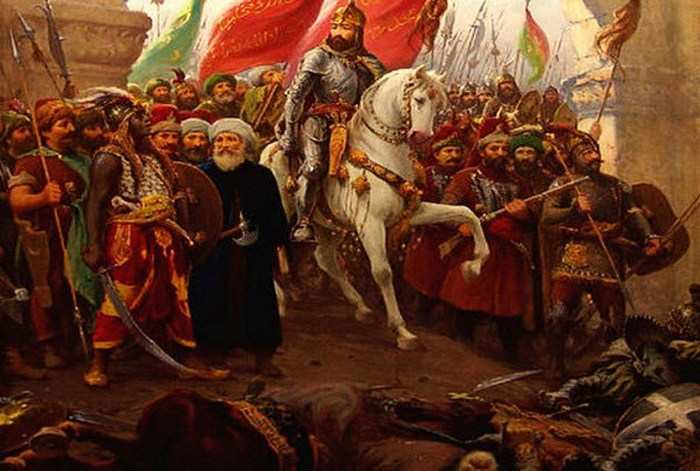
Atatürk vehemently rejected the Treaty of Sèvres and launched the Turkish War of Independence (1919–1923). His forces successfully expelled foreign occupiers—including Greek, Armenian, and French troops—and officially abolished the Ottoman Sultanate in 1922, bringing the 600-year-old dynastic rule to a close. In 1923, the international community signed the Treaty of Lausanne, recognizing the total sovereignty of the new, secular Republic of Turkey, with Atatürk serving as its first visionary president.
Conclusion: The Enduring Legacy of the Fall
The collapse of the Ottoman Empire was not an overnight phenomenon, but a slow, agonizing process driven by centuries of economic stagnation, military obsolescence, the unstoppable tide of global nationalism, and the disastrous miscalculations made during World War I.
Today, the legacy of the empire’s spectacular fall is still profoundly felt across the globe. The arbitrary borders drawn by European powers in the immediate aftermath of its collapse laid the volatile groundwork for many of the geopolitical conflicts that continue to plague the Middle East today. Understanding the complex history of the Ottoman Empire’s rise and fall is absolutely essential for anyone looking to grasp the modern dynamics of Europe, the Middle East, and the broader global political landscape.