
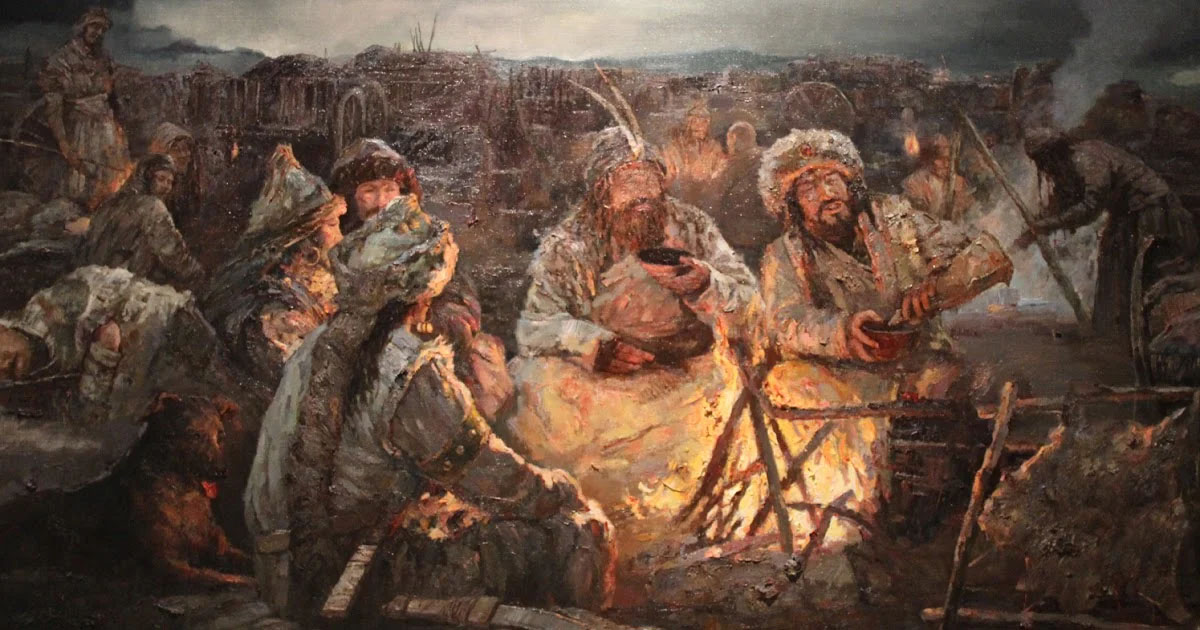
For centuries, the eastern Asian steppes were dominated by a formidable force that struck fear into the hearts of ancient Chinese emperors. They were the Xiongnu, a powerful confederation of nomadic warriors whose mastery of horseback archery made them an unstoppable military machine. Their persistent threat even prompted the construction of early sections of the Great Wall of China. However, no empire lasts forever.
The fall of the Xiongnu Empire was not the result of a single disastrous battle, but rather a complex cocktail of relentless foreign wars, bitter internal divisions, devastating climate events, and the rise of rival nomadic tribes. If you are an ancient history enthusiast looking to understand the collapse of this legendary steppe confederation, read on to discover exactly how the Xiongnu Empire unraveled.
Who Were the Xiongnu? A Brief Overview
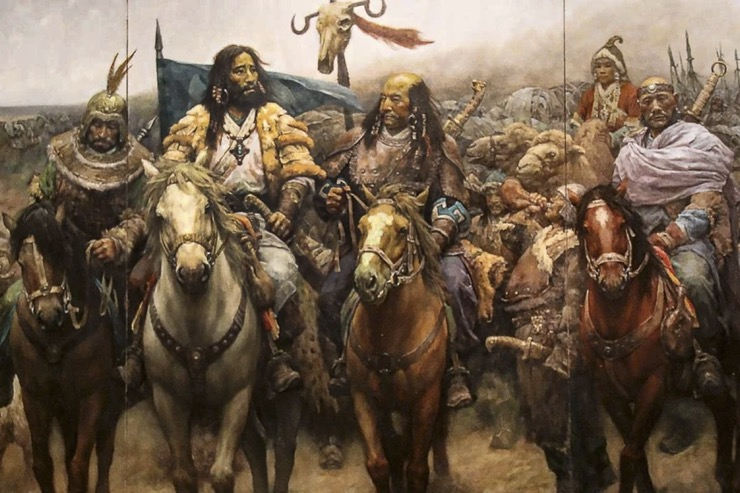
Emerging in the 3rd century BC, the Xiongnu Empire was the first major nomadic empire in the Asian steppes, centered roughly in modern-day Mongolia. Under the brilliant and ruthless leadership of Modun Chanyu, the Xiongnu united the fractured tribes of the steppe into a highly centralized military and political powerhouse.
At their peak, the Xiongnu controlled vital trade routes and consistently extracted massive tributes—including silk, grain, and gold—from the neighboring Han Dynasty through the heqin (marriage alliance) system. But as the Han Dynasty grew stronger, the power dynamic began to shift, setting the stage for one of the most consequential conflicts in ancient history.
The Han-Xiongnu War: The Beginning of the End
The turning point for the Xiongnu came with the ascension of Emperor Wu of Han (141–87 BC). Tiring of the humiliating tribute system and constant border raids, Emperor Wu decided to take the fight to the nomads.
Emperor Wu’s Aggressive Tactics
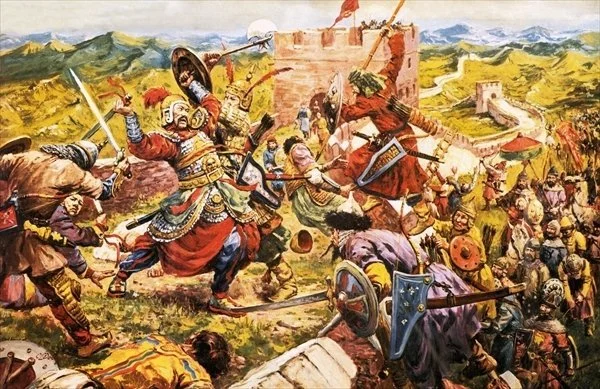
Emperor Wu fundamentally changed Chinese military strategy. He invested heavily in cavalry, breeding stronger horses to match the Xiongnu’s mobility on the open steppe. The Han Dynasty launched a series of massive, deep-penetrating military campaigns into Xiongnu territory.
These campaigns effectively pushed the Xiongnu out of the fertile Hexi Corridor and the Ordos Loop, cutting them off from vital agricultural resources and control over the lucrative Silk Road. Without the wealth generated by taxing Silk Road merchants, the Xiongnu economy suffered a crippling blow.
Internal Strife: The Great Divide
External pressure from the Han Dynasty exacerbated existing political cracks within the Xiongnu leadership. Nomadic succession was rarely peaceful, and the empire began to suffer from a series of debilitating civil wars over who would hold the title of Chanyu (the supreme ruler).
The Split: Northern vs. Southern Xiongnu
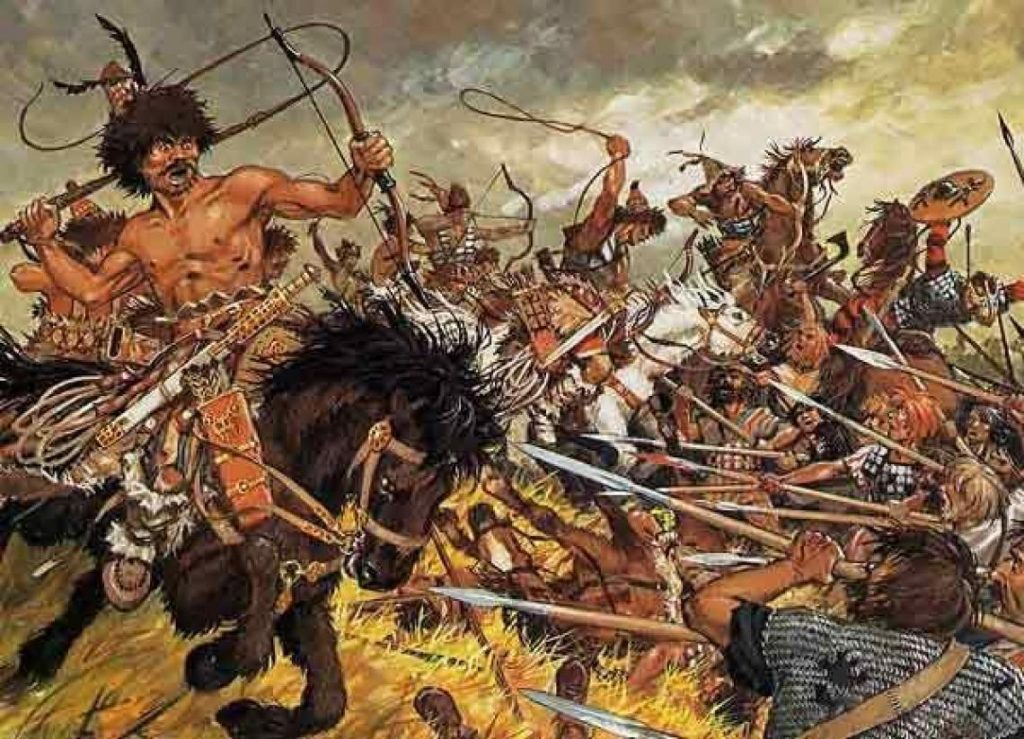
By 48 AD, the empire reached its breaking point and fractured into two distinct factions:
- The Southern Xiongnu: Realizing they could no longer sustain a two-front war against the Han and their northern brethren, the Southern Xiongnu chose to submit to the Han Dynasty. They became a tributary state, acting as a buffer zone for China against other hostile nomads.
- The Northern Xiongnu: The Northern faction refused to surrender and retreated further into the Mongolian steppes, attempting to hold onto their independence and traditional way of life. However, they were now isolated and surrounded by enemies.
Environmental Disasters and Economic Ruin
While warfare and politics fractured the empire, nature delivered a devastating secondary blow. Nomadic societies are highly vulnerable to ecological shifts, and the 1st century AD brought severe climatic challenges to the Eurasian steppe.
Records indicate periods of harsh, prolonged winters (known as dzud in modern Mongolia) and severe droughts. These extreme weather events decimated the Xiongnu’s livestock herds—their primary source of food, transportation, and wealth. Combined with the loss of Chinese agricultural subsidies and Silk Road revenue, the Northern Xiongnu faced widespread famine and economic collapse, leaving them severely weakened and unable to mount effective counter-attacks.
The Final Blow: The Rise of the Xianbei
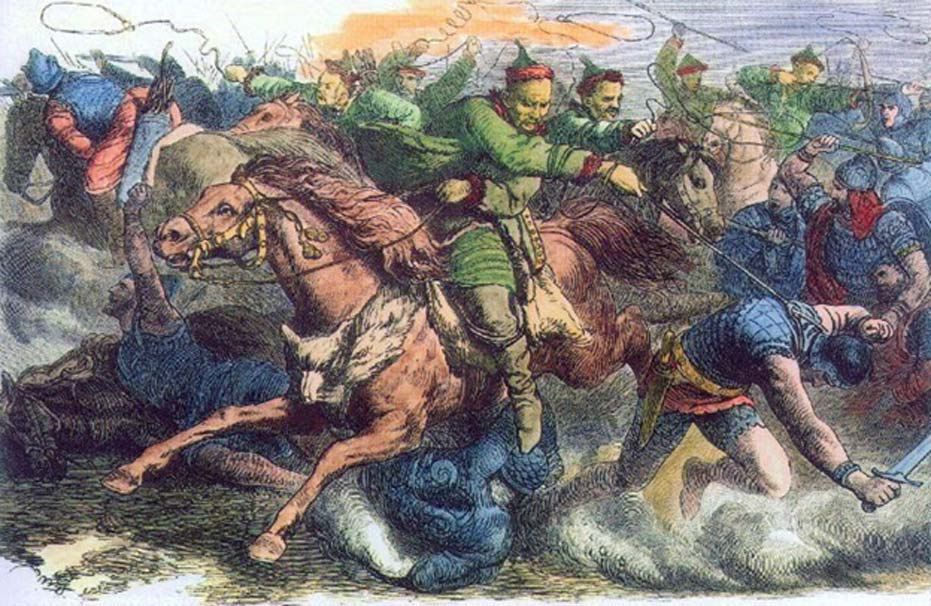
As the Northern Xiongnu struggled to survive, a new power emerged in the east: the Xianbei. Originally subject to the Xiongnu, the Xianbei took advantage of their former overlords’ weakened state.
Encouraged and occasionally funded by the Han Dynasty, the Xianbei launched relentless attacks against the Northern Xiongnu. The final nail in the coffin came in 89 AD at the Battle of Ikh Bayan, where a joint force of Han Chinese and Southern Xiongnu definitively crushed the Northern Xiongnu forces.
Following this devastating defeat, the Xianbei swept in, completely displacing the remnants of the Northern Xiongnu by the mid-2nd century AD. The remaining Northern Xiongnu tribes fled westward into the vastness of the Eurasian steppe, disappearing from Chinese historical records.
The Legacy of the Xiongnu
The fall of the Xiongnu Empire drastically reshaped the geopolitical landscape of ancient Asia. It secured the Han Dynasty’s control over the Silk Road, facilitating centuries of East-West trade and cultural exchange.
Interestingly, the story of the Xiongnu may not have ended in the Asian steppes. Many historians believe that the remnants of the Northern Xiongnu, fleeing westward to escape the Xianbei and the Han, eventually reached Europe centuries later. There, they became known to the Romans as the Huns, led by the infamous Attila, proving that the martial legacy of the Xiongnu echoed through history long after their original empire collapsed.
Summary for History Buffs:
- Peak: 3rd Century BC under Modun Chanyu.
- Main Rival: The Han Dynasty of China.
- Key Causes of Collapse: Han military expansion, loss of Silk Road control, civil war (North/South split), severe climate events, and the rise of the Xianbei.
- Final Defeat: Battle of Ikh Bayan (89 AD).