
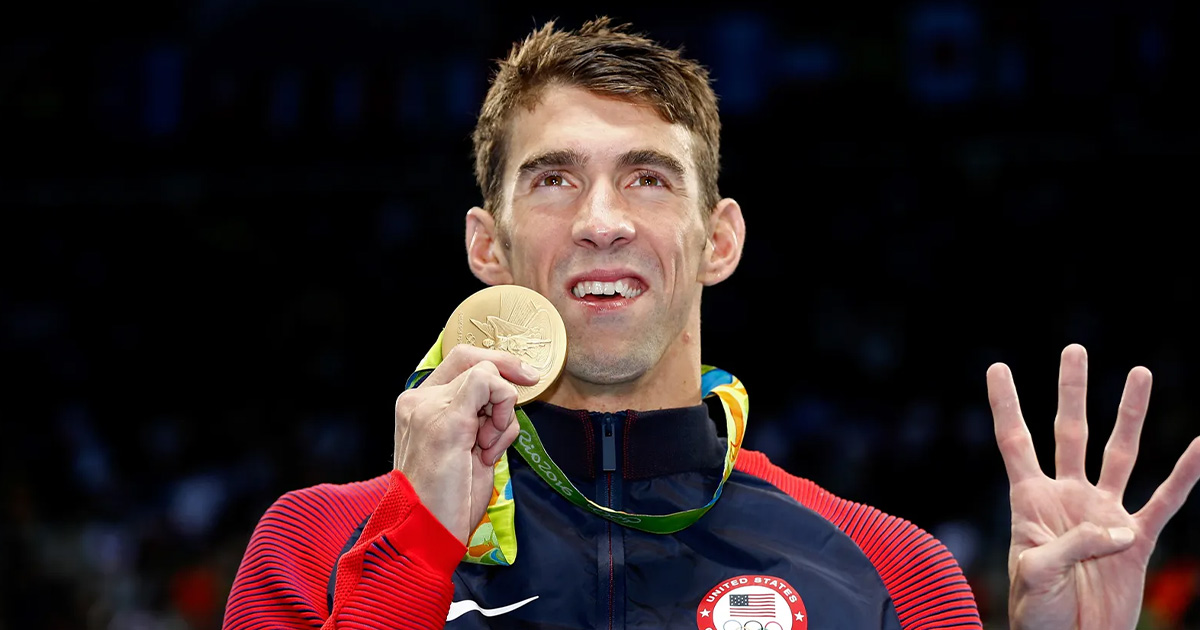
When the conversation turns to the greatest athletes in human history, one name consistently rises to the surface: Michael Phelps. With a staggering 28 Olympic medals to his name—23 of which are gold—Phelps is undisputed as the greatest Olympian of all time. His dominance in the swimming pool transcended the sport, capturing the attention of the globe and inspiring a generation of athletes.
But the story of Michael Phelps is not just about gold medals and shattered world records. It is a compelling narrative of physical uniqueness, relentless determination, struggles with mental health, and ultimate redemption.
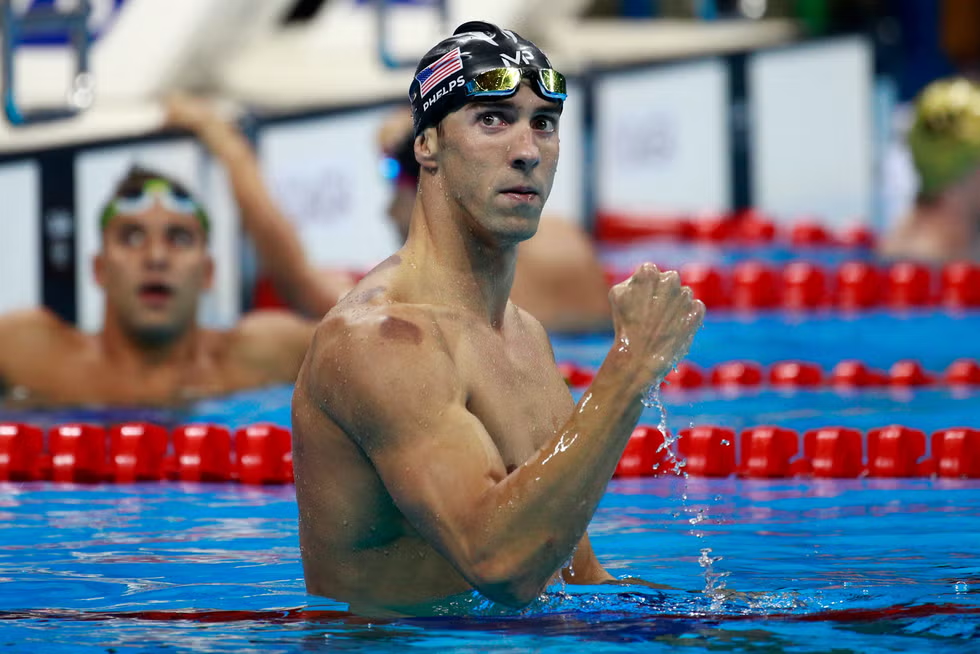
Early Life and the Discovery of a Prodigy
Born on June 30, 1985, in Baltimore, Maryland, Michael Fred Phelps II did not have an easy start. As a young boy, he was diagnosed with Attention Deficit Hyperactivity Disorder (ADHD). Struggling to sit still in the classroom, Phelps found his sanctuary in the swimming pool. Swimming provided an outlet for his boundless energy and a place where his hyper-focus became an incredible asset.
At the age of 11, Phelps crossed paths with coach Bob Bowman, a man who would become the guiding force throughout his entire athletic career. Bowman immediately recognized Phelps’s raw potential, noting his fierce competitive drive and unique physical attributes. Under Bowman’s rigorous training program at the North Baltimore Aquatic Club, Phelps quickly transformed from an energetic kid into a swimming phenom.
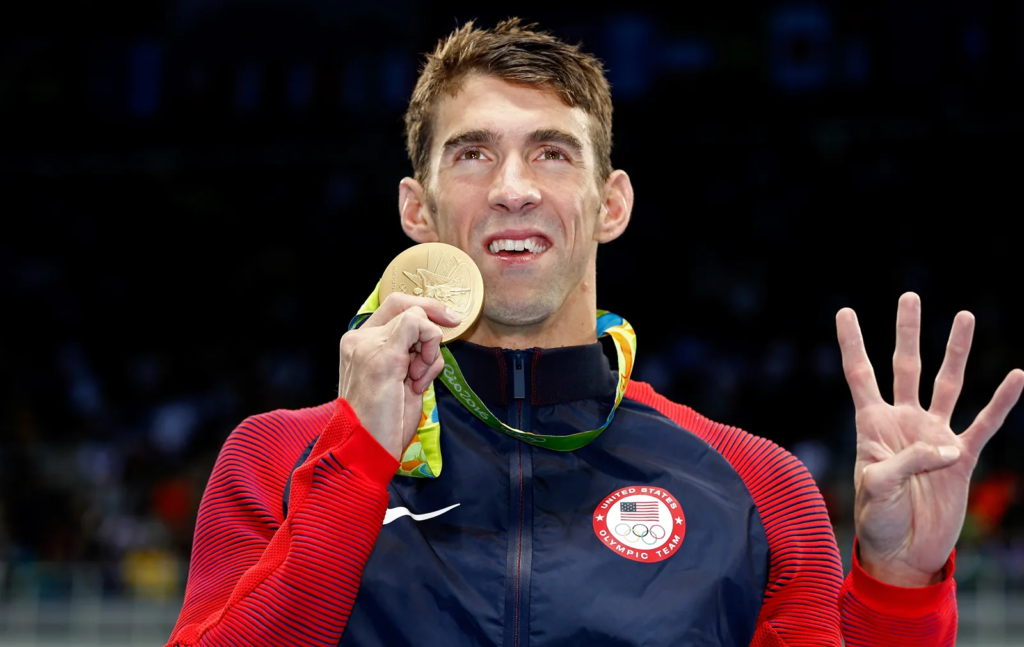
Olympic Dominance: The Road to 28 Medals
Michael Phelps’s Olympic journey is a masterclass in athletic longevity and dominance. Over the course of five Olympic Games, he consistently proved that he was in a league of his own.
Sydney 2000: The Arrival
At just 15 years old, Phelps qualified for the 2000 Sydney Olympics. He became the youngest male to make the U.S. Olympic swim team in 68 years. While he didn’t win a medal in Sydney, finishing fifth in the 200-meter butterfly, the experience lit a fire in him. Just months later, he broke the world record in the same event, becoming the youngest male swimmer ever to set a world record.
Athens 2004: Becoming a Superstar
The 2004 Athens Olympics marked Phelps’s arrival as a global superstar. He took home six gold medals and two bronze medals, narrowly missing Mark Spitz’s record of seven golds in a single Game. His versatility was on full display as he dominated in the butterfly, individual medley, and freestyle relays.
Beijing 2008: The Great Eight
If Athens made him a superstar, Beijing made him an immortal. At the 2008 Olympic Games, Phelps achieved the impossible: eight gold medals in a single Olympics, breaking Mark Spitz’s legendary 1972 record. He didn’t just win; he set seven world records in the process. The image of Phelps touching the wall by a hundredth of a second in the 100-meter butterfly remains one of the most iconic moments in sports history.
London 2012 and Rio 2016: The Comeback Kid
After winning four golds and two silvers at the 2012 London Olympics, Phelps announced his retirement. He had become the most decorated Olympian ever, and the physical and mental toll of the sport had caught up with him. However, the retirement was short-lived. Missing the thrill of competition and wanting to end his career on his own terms, he returned for the 2016 Rio Olympics. In Brazil, a rejuvenated Phelps captured five more gold medals and one silver, serving as the flag bearer for Team USA and capping off his career with the perfect fairytale ending.

The Perfect Swimming Machine: Physical Advantages
Much has been said about Michael Phelps’s anatomy, which seems custom-built by nature for competitive swimming. Sports scientists have frequently analyzed his physique to understand his edge in the water:
- The Wingspan: Standing at 6 feet 4 inches tall, Phelps possesses a disproportionate wingspan of 6 feet 7 inches, allowing his arms to act as massive oars in the water.
- The Torso: He has the torso of a man who is much taller, giving him incredible buoyancy and reducing drag in the water.
- Hyper-Flexible Joints: Phelps is double-jointed in his chest, knees, and ankles. His size 14 feet act like flippers, snapping at the end of his kicks for maximum propulsion.
- Lactic Acid Processing: Studies have shown that Phelps produces significantly less lactic acid than the average athlete, allowing him to recover at an astonishingly rapid pace between high-intensity races.
Coupled with a famously intense training regimen—swimming up to 50 miles a week at his peak—and a diet that reportedly reached 10,000 calories a day during heavy training blocks, his physical gifts were fully maximized.
Life After the Pool: Mental Health Advocacy
Perhaps Michael Phelps’s most enduring legacy will not be the hardware he collected, but the conversations he started. Following his initial retirement in 2012, Phelps faced severe bouts of depression, anxiety, and a highly publicized struggle with alcohol.
Rather than hiding his struggles, Phelps chose to be remarkably transparent. He has become a leading global advocate for mental health awareness, demonstrating that even the most successful athletes in the world are not immune to depression. Through the Michael Phelps Foundation, originally established to promote water safety and healthy living, he now heavily funds programs focused on mental well-being for youth and athletes alike.
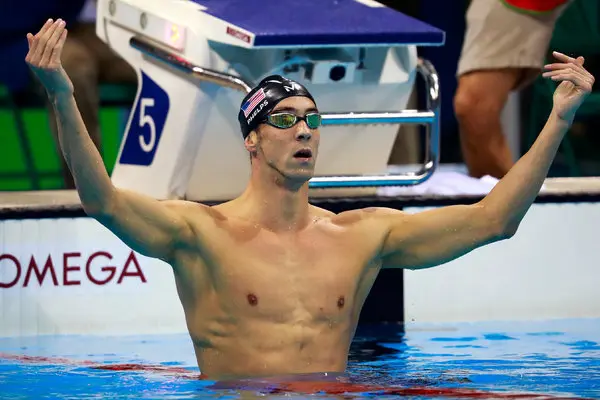
Conclusion: An Unmatched Legacy
Michael Phelps redefined what is possible in the realm of sports. His 28 Olympic medals stand as a towering monument to his talent, work ethic, and resilience. As a competitive swimmer, he pushed the boundaries of human performance, setting records that may take generations to break.
Today, as an entrepreneur, author, father, and mental health advocate, Phelps continues to inspire. He proved that true greatness is not just measured by the gold you wear around your neck, but by the hurdles you overcome and the positive impact you leave on the world long after you step out of the water.