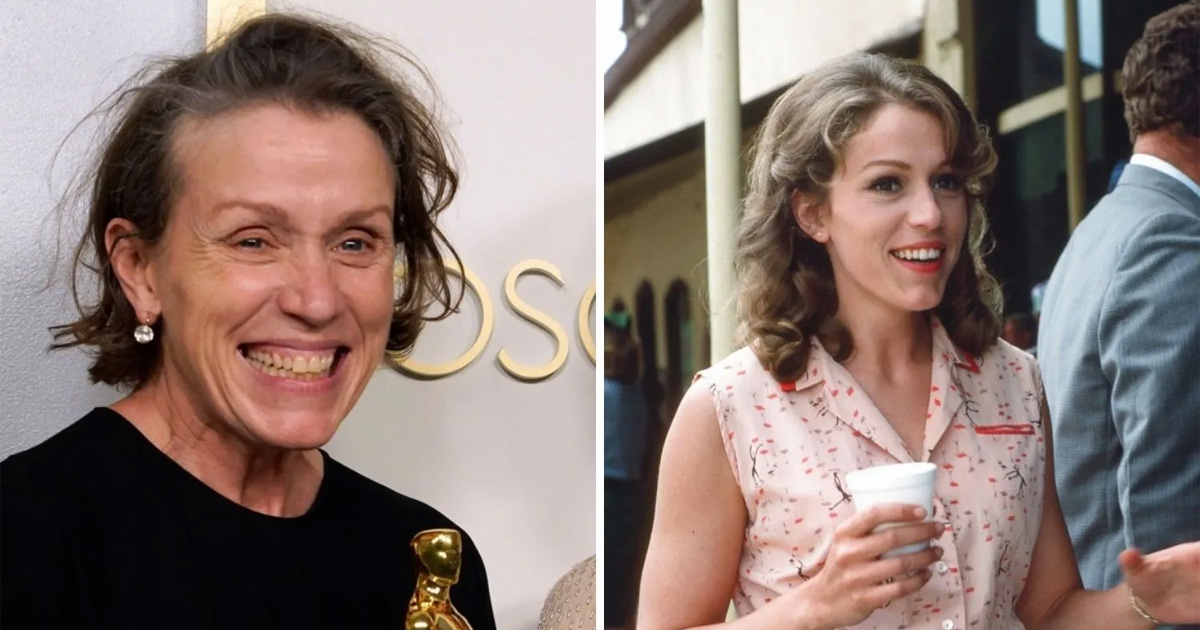
When discussing the most formidable and transformative actors in modern Hollywood, Frances McDormand is a name that commands immediate respect. Unapologetically authentic and fiercely talented, McDormand has carved out a unique space in the entertainment industry by rejecting traditional Hollywood glamour in favor of raw, unvarnished truth. With a career spanning over four decades, she has become a symbol of cinematic excellence, known for breathing life into complex, working-class, and deeply human characters.
For film enthusiasts and casual viewers alike, understanding Frances McDormand’s trajectory is essential to appreciating the evolution of American independent and mainstream cinema. This article explores her early life, her iconic collaborations, and the critically acclaimed performances that earned her a permanent place in the pantheon of acting legends.
Early Life and Theatrical Roots
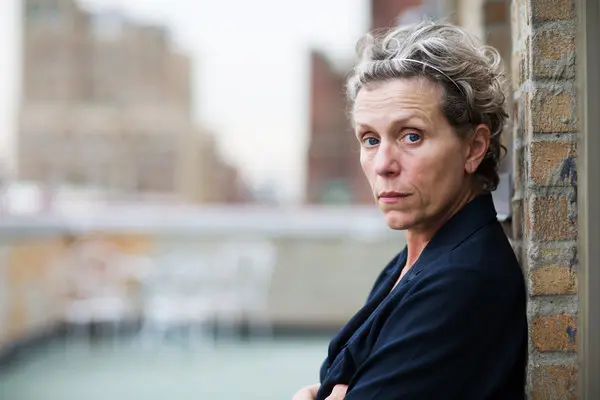
Frances Louise McDormand was born on June 23, 1957, in Gibson City, Illinois. Adopted at a young age by a Canadian-born couple—a Disciples of Christ pastor and a registered nurse—her childhood involved frequent relocations across the American Midwest and South before her family settled in Pennsylvania. This transient upbringing exposed her to a wide variety of American dialects, mannerisms, and regional cultures, an experience that would later deeply inform her remarkably versatile acting style.
McDormand discovered her passion for acting in high school. She pursued her theatrical ambitions at Bethany College in West Virginia, earning a Bachelor of Arts in Theater, and subsequently attended the prestigious Yale School of Drama, where she graduated with a Master of Fine Arts in 1982. It was at Yale that she honed her craft and developed the rigorous work ethic that would define her career on both the stage and the silver screen.
The Coen Brothers Connection and Fargo
McDormand’s cinematic breakthrough is intrinsically linked to her professional and personal partnership with filmmakers Joel and Ethan Coen. Shortly after moving to New York, she auditioned for their debut feature film, the 1984 neo-noir thriller Blood Simple. She landed the lead role of Abby, marking her feature film debut and the beginning of a legendary creative collaboration. She and Joel Coen married later that same year.
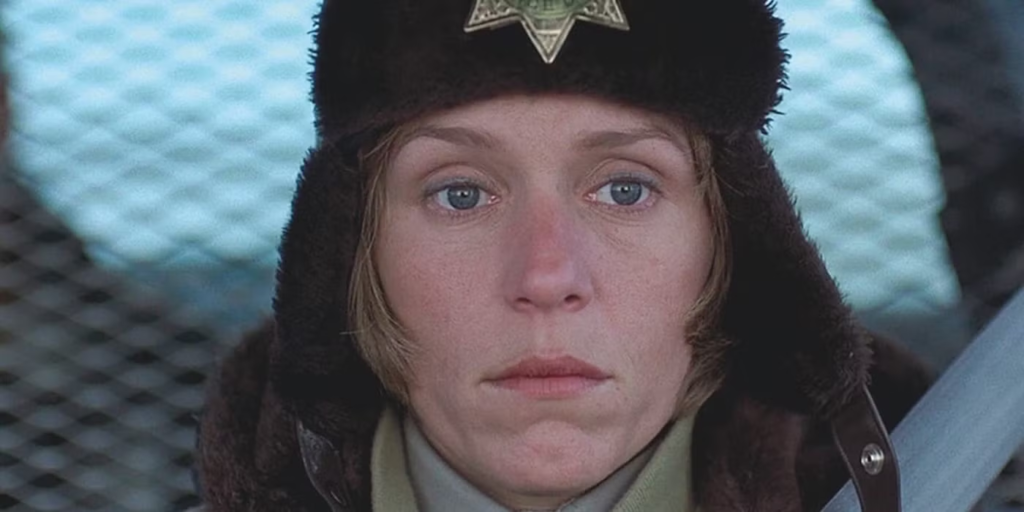
While she delivered stellar performances in films like Mississippi Burning (1988)—which earned her first Academy Award nomination—and Almost Famous (2000), it was her role in the Coen Brothers’ 1996 dark comedy Fargo that cemented her status as a cinematic icon. Playing Marge Gunderson, a pregnant, fiercely intelligent, and unfailingly polite Minnesota police chief, McDormand delivered a masterclass in subtlety and warmth. The role earned her the Academy Award for Best Actress, proving that unconventional heroines could resonate deeply with global audiences.
Expanding the Repertoire: The Triple Crown of Acting
What truly sets McDormand apart is her refusal to be typecast. Rather than capitalizing on the mainstream success of Fargo by taking on standard Hollywood leading-lady roles, she returned to the theater and took on diverse, challenging character roles in independent films.
Her immense talent is perhaps best quantified by her achievement of the elusive Triple Crown of Acting—winning an Academy Award, a Primetime Emmy Award, and a Tony Award.
- Tony Award (2011): She won Best Actress in a Play for her gritty portrayal of Margie Walsh in Good People.
- Emmy Award (2015): She secured the Outstanding Lead Actress in a Limited Series award for playing the titular, delightfully prickly character in HBO’s acclaimed miniseries Olive Kitteridge (which she also produced).
These accolades highlight her incredible range, proving her capability to command a live audience just as effectively as she dominates the camera.
A Renaissance of Acclaim: Three Billboards and Nomadland
As McDormand entered her sixties—an age where many actresses historically faced limited opportunities—she delivered two of the most powerful performances of her career, sparking a massive career renaissance.
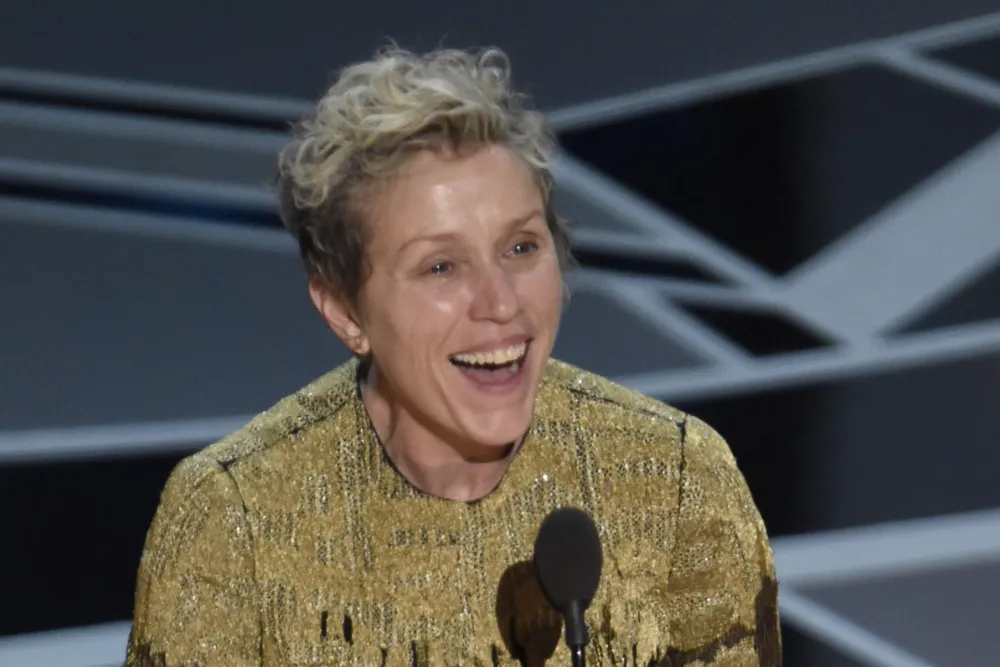
In 2017, she starred as Mildred Hayes in Martin McDonagh’s Three Billboards Outside Ebbing, Missouri. Playing a grieving, rage-filled mother seeking justice for her murdered daughter, McDormand was a force of nature. Her explosive and heartbreaking performance earned her a second Academy Award for Best Actress. During her acceptance speech, she famously popularized the term “inclusion rider,” advocating for diversity and equity in filmmaking.
Just three years later, she collaborated with director Chloé Zhao on the 2020 film Nomadland. Portraying Fern, a widow who packs her van and sets off on the road as a modern-day nomad following the economic collapse of her company town, McDormand blurred the lines between fiction and documentary. Her deeply empathetic, stripped-down performance resonated during the height of the global pandemic. The film was a critical triumph, and McDormand won her third Academy Award for Best Actress, while also taking home the Academy Award for Best Picture as one of the film’s producers.
The McDormand Philosophy: Authenticity Over Glamour
Beyond her accolades, Frances McDormand’s legacy is defined by her rebellious public persona. In an industry heavily reliant on vanity, plastic surgery, and intensive PR management, McDormand proudly embraces natural aging. She frequently attends major award ceremonies without makeup and often eschews designer gowns for practical, comfortable attire.
She views her face as a roadmap of her life and experiences, arguing that altering it would rob her of the very tools she uses to portray real, everyday women. This fierce dedication to authenticity makes her characters feel profoundly lived-in and relatable, ensuring that the audience sees the character first and the celebrity second.
Conclusion: An Enduring Legacy
Frances McDormand is not just an actress; she is a cinematic pioneer. With four Academy Awards to her name (three for acting, one for producing) and a filmography filled with indelible characters, she has redefined what it means to be a leading woman in Hollywood. From the snowy plains of Minnesota in Fargo to the expansive American West in Nomadland, McDormand’s work serves as a testament to the power of uncompromised artistic integrity. As she continues to select projects that challenge both herself and her audience, her legacy as one of the greatest actors of her generation remains absolutely indisputable.